







สถาบันวิจัยวิทยาศาสตร์ขนาดใหญ่
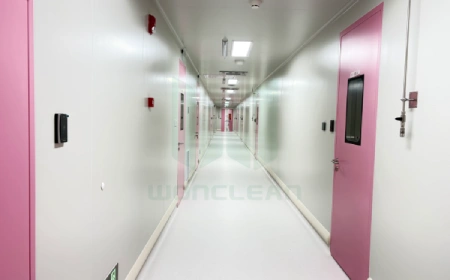
วิศวกรรมอุปกรณ์ห้องสะอาดสําหรับสภาพแวดล้อมวิจัยหลายผู้ใช้หลายวิชา
1. Project Overview
A large scientific research institute—comprising multiple departments such as molecular biology, nanotechnology, advanced materials, and pharmaceutical sciences—initiated a major infrastructure upgrade to centralize its high‑containment and high‑sensitivity research capabilities. The institute required a flexible, scalable cleanroom facility capable of supporting diverse research activities ranging from cell culture and viral vector production to nanofabrication and analytical chemistry.
Unlike a single‑owner pharmaceutical company, the institute hosts dozens of independent research groups, each with varying cleanliness, safety, and equipment requirements. The primary challenge was to design a shared cleanroom equipment ecosystem that could serve multiple users without cross‑interference, while maintaining compliance with institutional biosafety levels (BSL‑2 and BSL‑3) and ISO 14644 standards.
2. Client Requirements
-
Multi‑User Flexibility: Cleanroom zones that can be reconfigured for different research protocols (e.g., sterile cell work one week, nanoparticle synthesis the next).
-
Segregated Containment: Isolated modules for BSL‑2, BSL‑3, and low‑humidity nanofabrication processes, each with dedicated HVAC and airlock systems.
-
High Reliability & Uptime: 24/7/365 operation with redundant cleanroom equipment to avoid research downtime.
-
ประสิทธิภาพพลังงาน: เนื่องจากพื้นที่ขนาดใหญ่ (3,500 m² สถาบันต้องการโซลูชั่น HVAC และการกรองในห้องสะอาดพลังงานต่ำ
-
Training & Accessibility: Equipment interfaces designed for easy operation by rotating students, postdocs, and visiting scientists.
3. Cleanroom Equipment Engineering Solution
ทีมวิศวกรของเราส่ง แพ็คเกจอุปกรณ์ห้องสะอาดศูนย์กลาง ปรับให้เหมาะกับสภาพแวดล้อมการวิจัยหลายผู้เช่า:
A. Zoned HVAC and Filtration
-
Dedicated AHU per cleanroom class: Separate air handling units for ISO Class 5, Class 6, and Class 7 zones.
-
ธนาคารกรอง HEPA / ULPA: โมดูลกรองที่ติดตั้งบนเพดานที่มีการไหลของอากาศที่ปรับได้สําหรับรูปแบบทิศทางเดียวหรือไม่ใช่ทิศทางเดียวในระดับการวิจัย
-
การระบายอากาศความเร็วต่ำ ในโซนที่มีความผิดปกติต่ำ (เช่นสำหรับการเตรียมกล้องจุลทรรศน์อิเล็กทรอน)
B. Modular Cleanroom Architecture
-
Demountable hardwall panels: Allow reconfiguration of lab layouts without structural modifications.
-
Color‑coded modular walls: Visual differentiation of cleanliness levels (e.g., white = ISO 7, blue = ISO 6, yellow = BSL‑3).
-
Interlocked pass‑through autoclaves and chemical dunk tanks: For safe material transfer between containment levels.
C. Shared Containment and Process Equipment
-
Multiple Class II Type A2 biosafety cabinets (BSCs): Each equipped with individual monitoring but connected to a common exhaust plenum.
-
ตัวแยกกล่องถุงมือแบบพกพา: For oxygen/moisture‑sensitive materials research.
-
Centralized vacuum and gas systems: Ultra‑high purity nitrogen, argon, and clean dry air distributed via stainless steel manifolds.
D. Central Monitoring & Access Control
-
Room‑by‑room EMS/BMS: Real‑time pressure, particle count, temp, RH, and door interlock status.
-
RFID‑based access system: Restricts users to authorized cleanroom classes and records usage for billing/accountability.
-
Visual alarm beacons at each entry for rapid pressure‑cascade failure notification.
4. Key Engineering Challenges & Solutions
| ความท้าทาย | Solution |
|---|---|
| Preventing cross‑contamination between BSL‑2 and BSL‑3 zones | Physical separation + cascading negative pressure (−25 Pa to −50 Pa) + dedicated BIBO filter housings |
| Supporting high‑heat equipment (furnaces, reactors) inside cleanrooms | Local exhaust connections + water‑cooled equipment enclosures + supplementary chilled beams |
| User‑induced contamination (multiple researchers per day) | Mandatory gowning rooms with air showers + sticky mats at each entrance + routine ATP surface testing |
| Vibration from nearby foot traffic affecting sensitive tools | Isolated concrete inertia blocks for AFM, TEM, and microbalances |
5. Validation & Compliance
อุปกรณ์ห้องสะอาดทั้งหมดได้รับคุณสมบัติ ISO 14644‑1:2015 และความต้องการด้านความปลอดภัยทางชีวภาพของสถาบัน:
-
DQ: Simulated multi‑user scenarios (e.g., simultaneous cell culture and nanoparticle synthesis).
-
IQ: การเชื่อมต่อที่ได้รับการตรวจสอบ การรับรองกรอง และการติดตั้งอุปกรณ์
-
OQ: Tested air change rates (20–60 ACH depending on class), pressure cascades, and recovery time (<15 min to ISO Class 5).
-
PQ: การติดตามแบบไดนามิกสามเดือนด้วยโปรโตคอลการวิจัยจริง รวมถึงการตัวอย่างอากาศของจุลินทรีย์
Outcome: The institute achieved full operational certification with เป็นศูนย์เหตุการณ์การปนเปื้อนข้าม ในช่วงเวลาการตรวจสอบ
6. ผลลัพธ์โครงการ
-
Cleanroom Area: 3,500 m² (ISO 5: 400 m², ISO 6: 1,200 m², ISO 7: 1,900 m²)
-
User Capacity: Up to 150 researchers per day across 28 independent lab modules
-
ประหยัดพลังงาน: ลดพลังงาน HVAC 32% ผ่านพัดลมความเร็วแปรและระบายอากาศที่ควบคุมตามความต้องการ
-
อัตราการใช้งาน: > 85% ภายในหกเดือนของการเปิด, รองรับ 12 กลุ่มวิจัยจาก 4 คณะ
สถาบันวิจัยตอนนี้ดำเนินการสิ่งอำนวยความสะดวกหลักของห้องสะอาดที่ใช้ร่วมกันที่แท้จริง และมีประสิทธิภาพสูงทําให้โครงการระหว่างวิชาที่ไม่สามารถทําได้ก่อนหน้านี้เนื่องจากการปนเปื้อนหรือความขัดแย้งการจัดการ
7. ข้อสรุป
สําหรับสถาบันวิจัยวิทยาศาสตร์ขนาดใหญ่ วิศวกรรมอุปกรณ์ห้องสะอาดต้องให้ความสําคัญความยืดหยุ่น การแยก และการออกแบบที่เป็นศูนย์กลางผู้ใช้ มากกว่าในสถานที่ยาที่เฉพาะ โครงการนี้แสดงให้เห็นว่าด้วย HVAC ที่มีโซน, สถาปัตยกรรมผนังแข็งแบบโมดูล, และการติดตามที่รวมถึง, คอมพล็กซ์ห้องสะอาดเดียวสามารถให้บริการนักวิจัยหลายร้อยคนทั่ว BSL-2 ขณะรักษา ISO Class 5 ความซื่อสัตย์และประสิทธิภาพพลังงาน